
Can Torah commentary promote dialogue and call for peace between age old enemies? Rabbi Eliyahu Benamozegh believed it could. Born in Livorno, Italy in 1823 to parents originally from Fez, Morocco, Rabbi Benamozegh became one of Italian-Sephardi Jewry's most innovative, thought provoking and creative thinkers. His voluminous writings blend the depth of Talmudic and Kabbalistic texts with humanitarian values and religious universalism. His most famous work articulating this "Judeo-Universal" message is Israel et L'Humanite - Israel and Humanity. Originally written in French and subsequently translated into many languages, Israel et L'Humanite is the classic starting point for those who wish to be initiated into the unique world of Rabbi Benamozegh's thought.
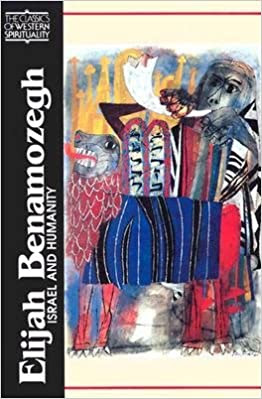
While this work of Jewish thought is deep, rich and fascinating, our entry into Rabbi Benamozegh's world will begin elsewhere, through Em La-Mikra, his masterful and controversial commentary to the Torah. Masterful, because he dared think out of the box and challenge his readers to think beyond traditional boundaries. Controversial, for those very same reasons.

In this week's Torah portion, Parashat Toldot, we are introduced to a sibling rivalry that would last for several centuries beyond the Biblical period and spread far beyond the Middle East. Two brothers - Esau and Jacob - were born of the same parents (Isaac and Rebecca), but were destined to be rivals. Once the barren Rebekah conceived and carried twins in her womb, the Torah describes the foreshadow to their national rivalry. The children "struggled in her womb," and when Rebekah inquired of God as to why this was so, God answered:
"Two nations are in your womb, two separate peoples shall issue from your body."
(Genesis 25:22-23)
Jacob and Esau had a tumultuous upbringing, and the most famous story about their childhood involves the controversial episode of their father's blessing. Esau was the firstborn, and his father's "blessing" belonged to him. Through a painful and disturbing sequence of events, we are told how Jacob "came in deceit" - at the encouragement of his mother - to take away his brother Esau's blessing and claim it as his own.
This morally questionable episode intensified the rivalry between the two brothers, who were, as predicted, destined to become the fathers of different nations - Esau, the Edomites, and Jacob, the Israelites. Esau held a deep grudge against his brother for stealing his blessing, and threatened to kill him.
Fearing for Jacob's life, Rebekah sends him to stay with her brother Laban. "Stay with him a while, until your brother's fury subsides," she says. Isaac agrees, and sends him off:
"Then Isaac sent Jacob off, and he went to Paddan-Aram, to Laban the son of Bethuel the Aramean, the brother of Rebekah, mother of Jacob and Esau" (Genesis 28:5)
The commentator Rashi is perplexed by the words "mother of Jacob and Esau." The Torah could have simply said Laban the son of Bethuel the Aramean, the brother of Rebekah. Why add that she was the "mother of Jacob and Esau"? Don't we already know that? Rashi admits to being stumped by these seemingly superfluous words: "I do not know what this teaches us," says Rashi.
Rabbi Eliyahu Benamozegh disagrees. He believes it teaches us something very deep, about the soul of a mother. In his Em La-Mikra commentary, Rabbi Benamozegh offers a creative reading of this and one more verse, producing the sensitive voice of empathy for a mother towards her children.
He points out that just a few verses earlier, when Rebekah tells Jacob to flee to her brother's house to escape the wrath of Esau, she says "Let me not lose you both in one day" (Genesis 27:45). A brilliant philologist and grammarian, Rabbi Benamozegh points to the Hebrew term for "lose you" -eshkal -which actually means "bereaved" - as the key to understanding this verse. Rebekah's deepest fear, he says, is that her sons will meet up, engage in a physical struggle, and kill each other.
No matter their sibling rivalry, the two rival nations they are destined to lead, or the controversy over their father's blessing that she herself initiated, both Jacob and Esau are Rebekah's sons. A mother's greatest fear is the prospect of losing a child she bore. Rebekah's ultimate nightmare was to "lose both in one day."
It is for this reason, says Rabbi Benamozegh, that the Torah provides an emphatic reminder of Rebekah being mother of Jacob and Esau. It's more than an editorial note, and it's much deeper than Rebekah's bio. It's the essence of who she is - the mother of two children, the mother of Jacob and Esau.
In post-Biblical history, the rivalry between Esau and Jacob persisted. The Talmud speaks of an "eternal hatred between Esau and Jacob," interpreting Esau's Edomites to be the Roman Empire, and ultimately, Christianity as a whole. The history between Esau-Edom-Rome-Christianity vs. Jacob-Israel-Judaism is drenched in the bloodshed of destruction, inquisition and religious persecution.
In light of his sensitive insight of Rebekah as the mother of Jacob and Esau, as a mother who utimately cared about both of her boys, Rabbi Benamozegh probed the idea of a cessation of hatred, indeed of a reconciliation, between the offspring of Rebekah's boys. In Em La-Mikra and elsewhere, Rabbi Benamozegh challenged his Jewish readers to move away from the rabbinic dictum of eternal hatred between Esau and Jacob, opting instead to see each other as the children of one mother who can both bring about spiritual enlightenment to the world.
Such ideas (which I will explore in more detail in another posting, please God) were deemed controversial and heretical by many in the Ottoman Jewish world. The rabbis of Aleppo, Syria held a public burning of Em La-Mikra, and sent letters around the Ottoman Empire encouraging others to do the same. The rabbis of Damascus followed the example of their Aleppo brethren. The rabbis of Jerusalem did not go that far, but they did ban Em La-Mikra. Rabbi Haim Palagi from Izmir was the only vocal opponent of the book burnings, and he wrote a letter of support to Rabbi Benamozegh.
In a world continuously plagued by religious divisions that so often end in bloodshed, rather than burning Rabbi Benamozegh's works, it would behoove us to take heed to the insightful teachings of this brilliant Sephardic thinker.
Indeed, per the title of his brilliant work of Jewish thought, the future of Israel and Humanity hangs in the balance.
Shabbat Shalom
